Product UX, instructional design, LMS strategy
Designing Global HSE Academy as a branded learning experience.
A product and UX case study for shaping a premium learning platform experience over an external LMS backend, with BIS Safety functioning as the invisible engine behind the learner-facing brand.
1,700
Training videos
8
UX screens
3
Learning pathway tiers
1
LMS vendor coordinated
01
Platform Transformation
A before-and-after view of the LMS experience: from a vendor-led interface to a clearer, branded Academy platform.
Previous LMS
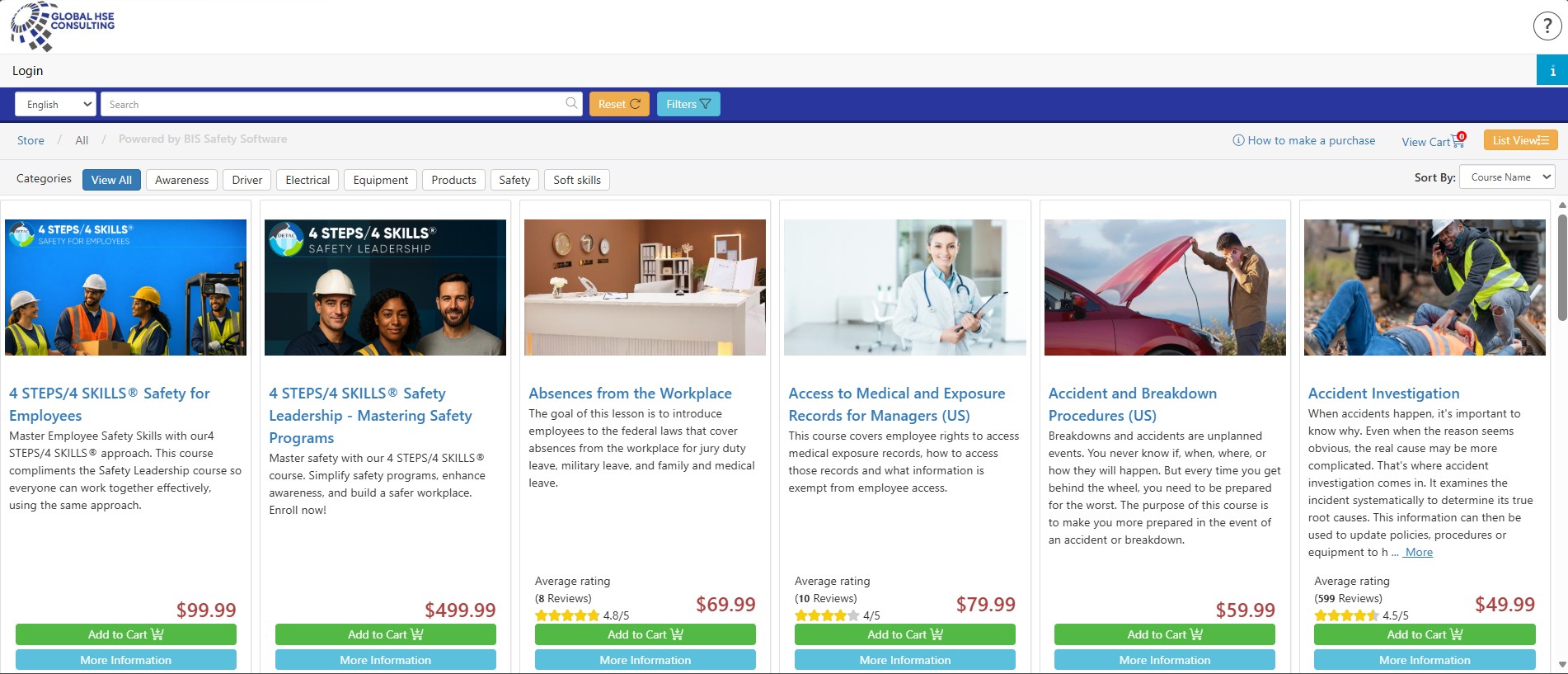
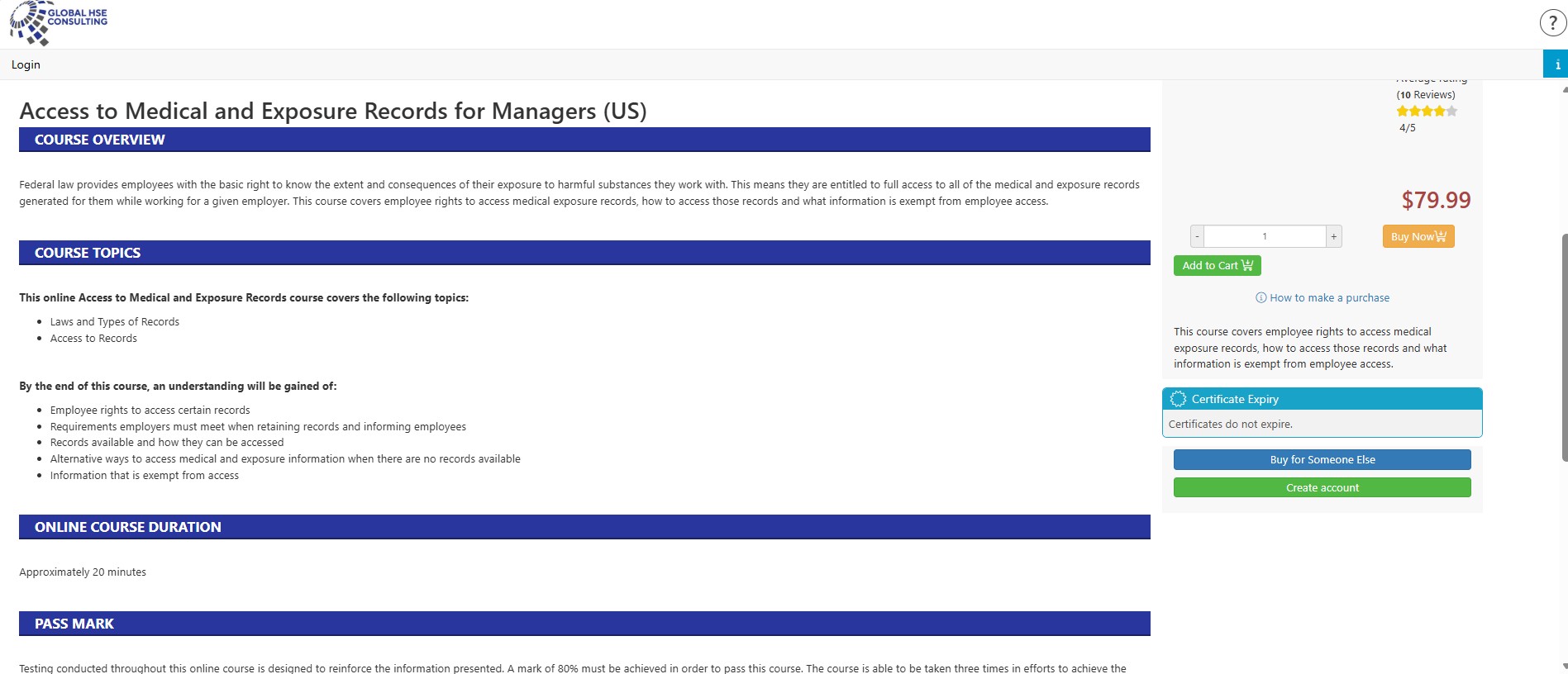
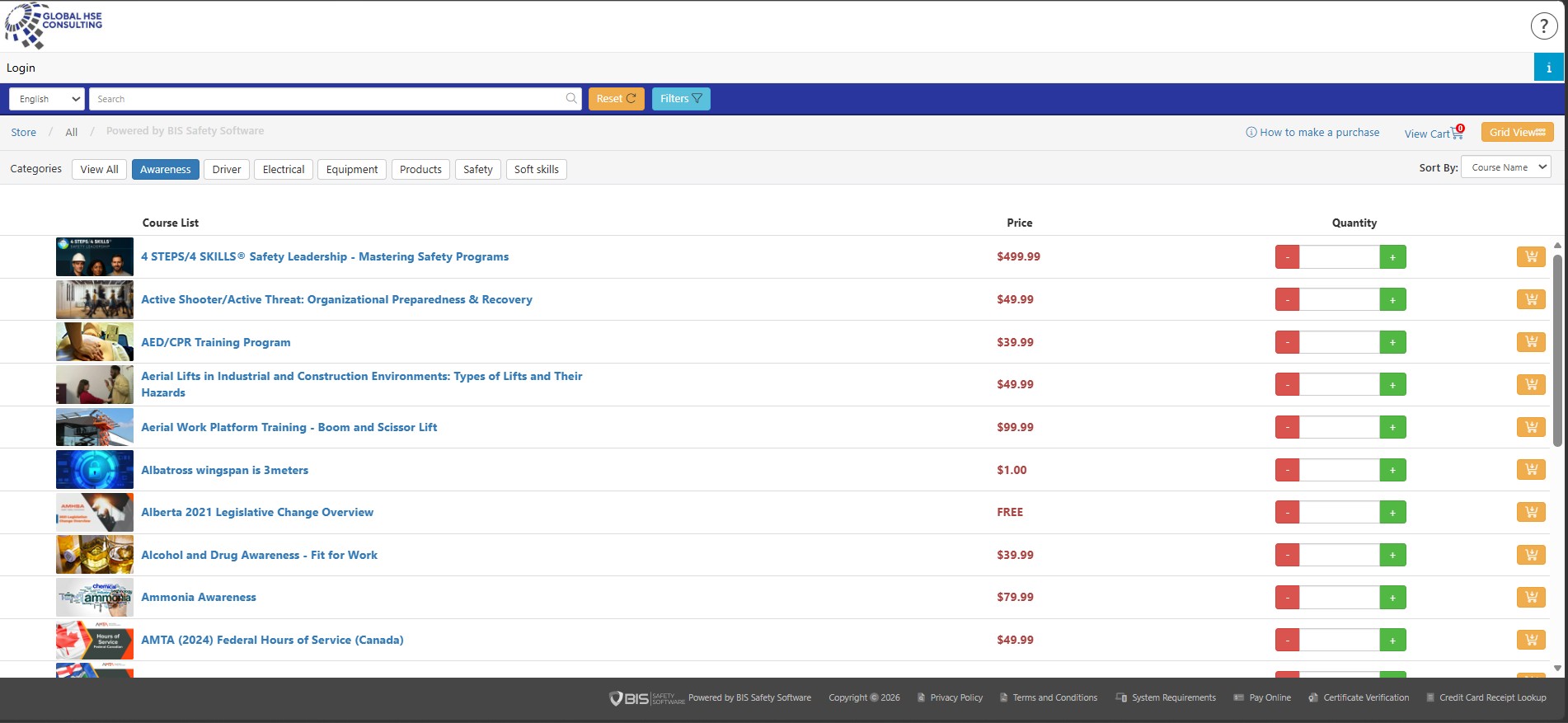
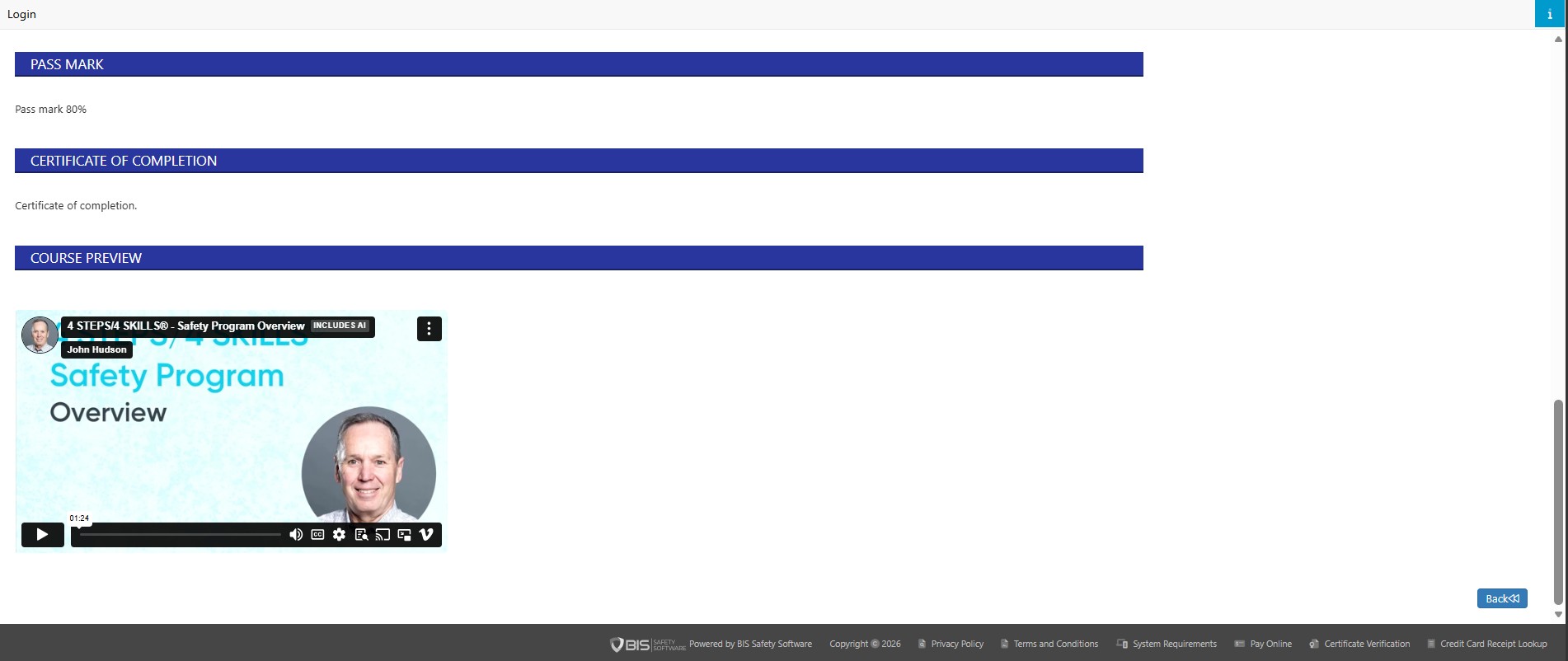
New LMS
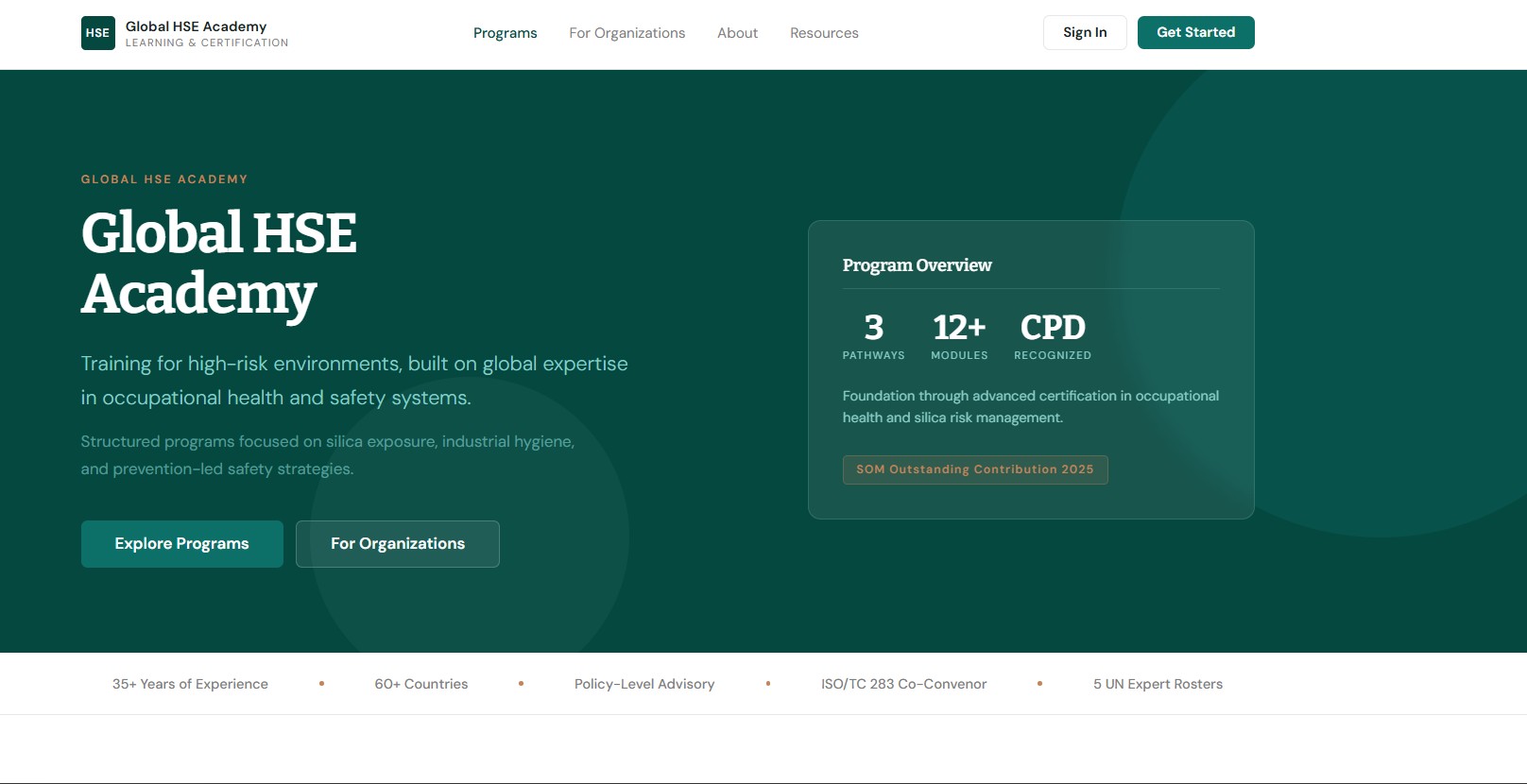
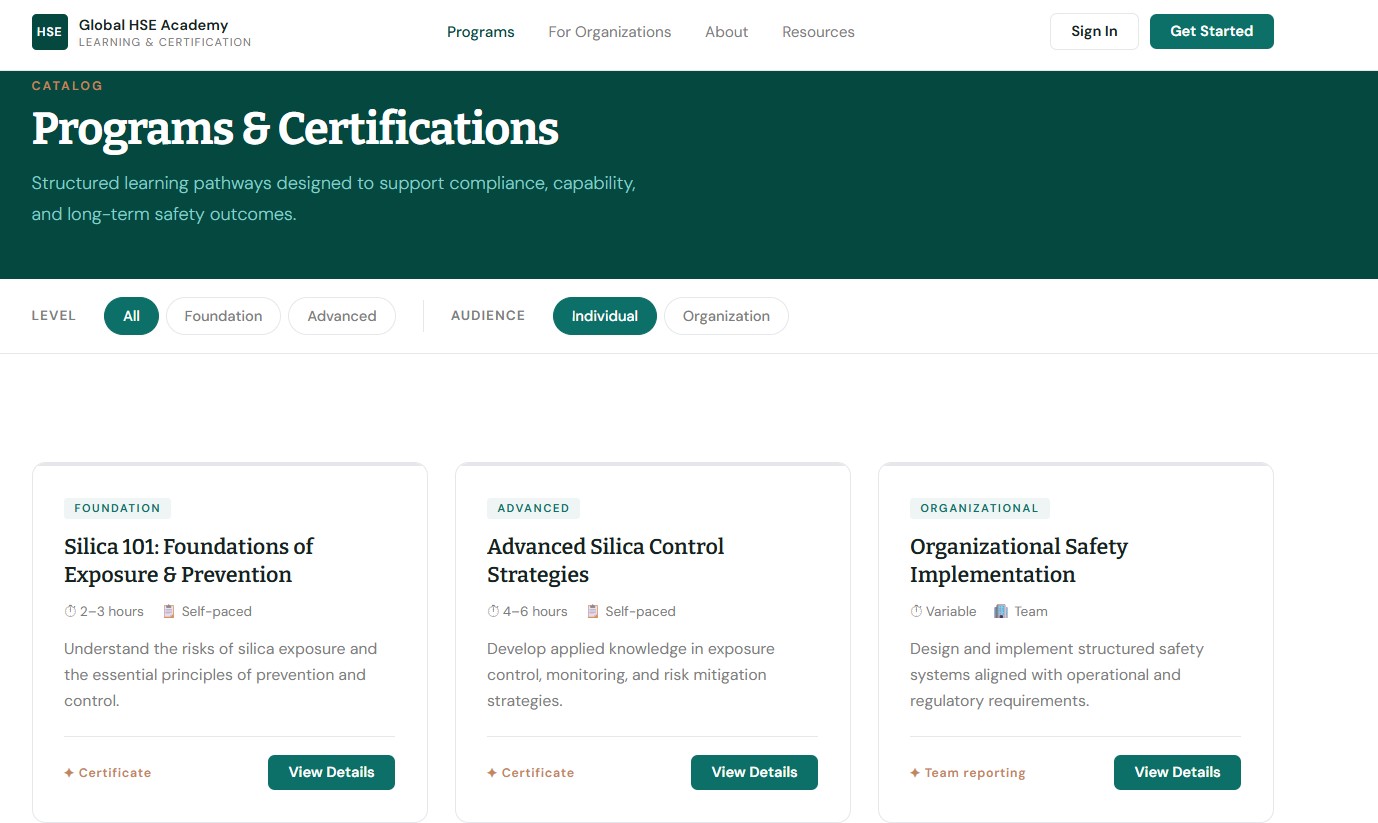
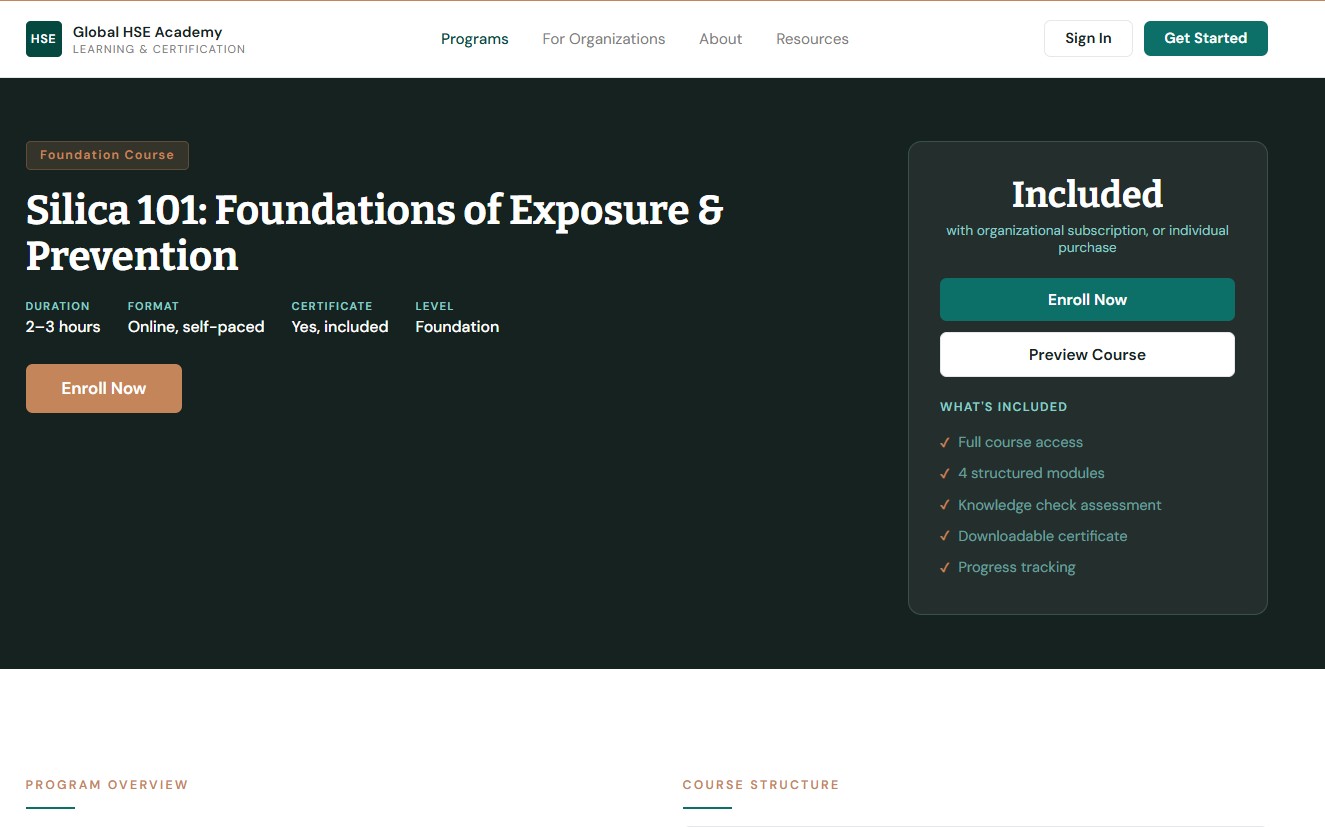
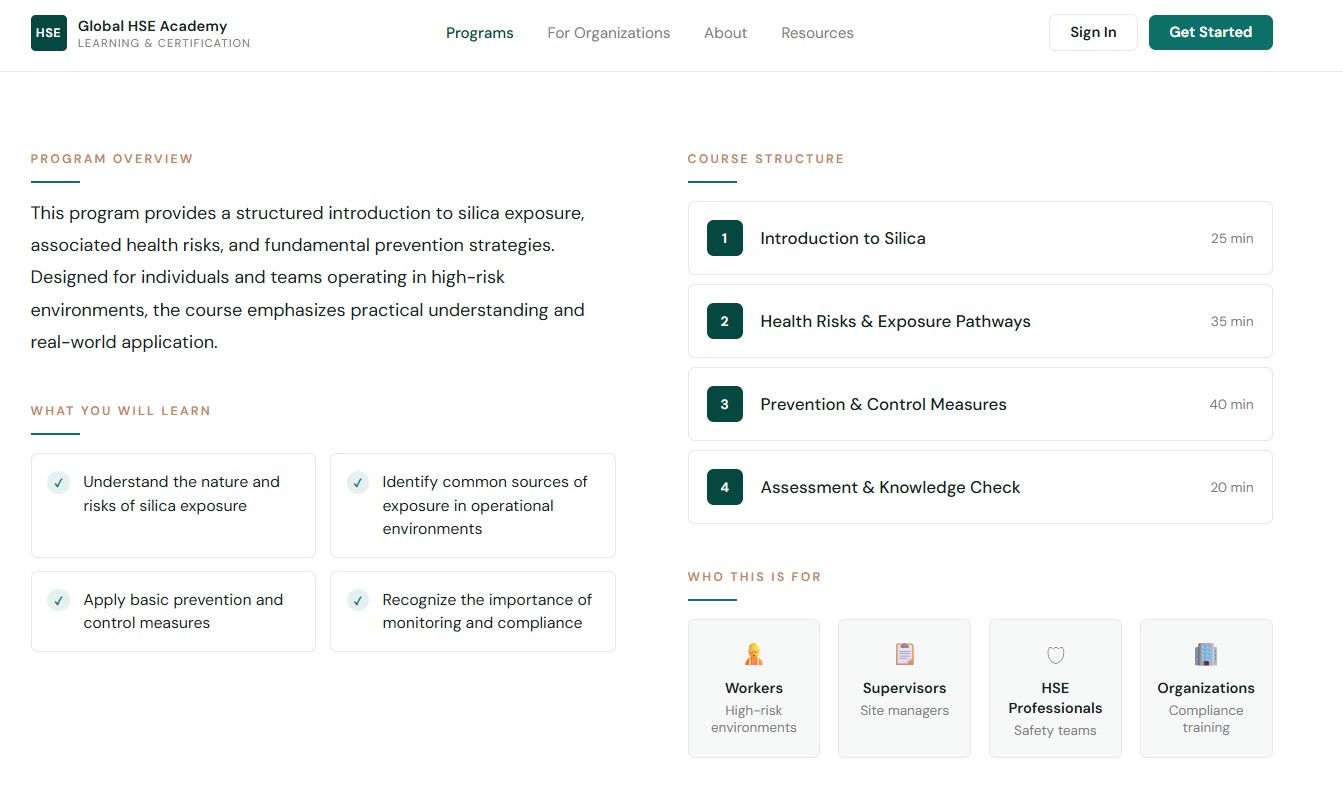
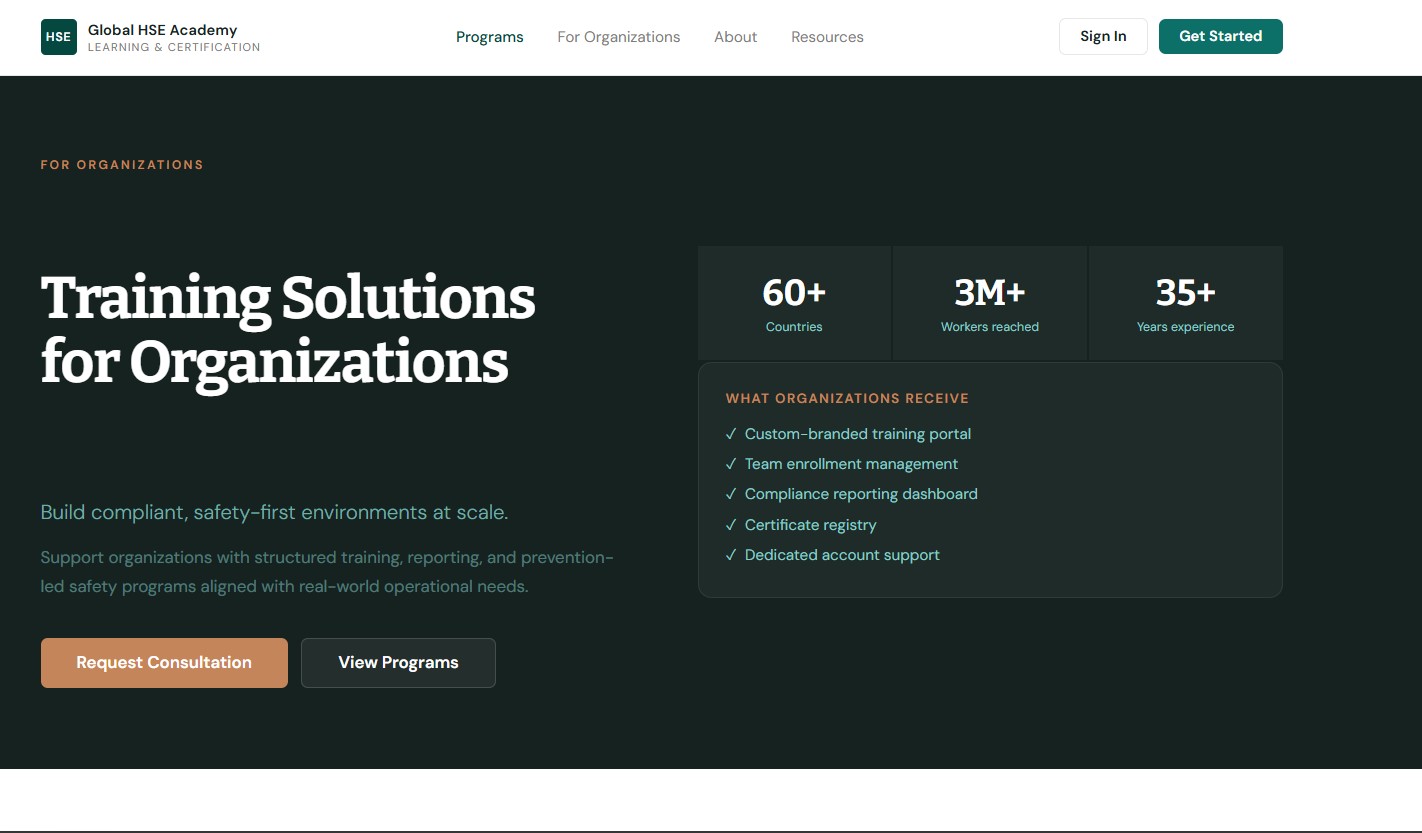
Transformation Summary
The redesign improved clarity, organized the learner journey around usable UX structure, removed the generic vendor-portal feel, and transformed the LMS into a branded Academy experience.
02
Overview
Platform
Global HSE Academy, a branded learning platform concept for occupational health and safety education.
My Role
Product UX strategy, instructional design structure, prototype direction, vendor coordination, and implementation handoff.
Audience
Professionals, organizations, safety leaders, and workforce learning teams seeking practical HSE training pathways.
Status
Strategy and UX prototype completed; vendor coordination and backend alignment prepared for implementation.
03
Challenge
The platform needed to feel like a distinct Global HSE Academy experience, not a generic LMS portal with a logo applied to it. Learners had to understand the offer, find the right pathway, enroll with confidence, and see certification value clearly.
At the same time, the build needed to respect the practical constraint of using BIS Safety as the backend. BIS would manage the operational LMS layer, while Global HSE Academy would own the learner-facing brand experience.
The strategic problem was therefore architectural: create a premium frontend layer that could guide discovery, learning, and trust while letting the external LMS operate quietly underneath.
04
Architecture
Frontend Layer
The visible academy experience.
The branded interface gives learners a clear sense of pathway, value, progress, and certification before they encounter backend LMS mechanics.
LMS Bridge
The connection between brand and system.
Enrollment, learner records, course access, and progress needed to move cleanly between the Academy experience and the LMS environment.
BIS Backend
The invisible engine.
BIS Safety remained the operational core for LMS functions, but the strategy kept that machinery behind the scenes so the learner perceived one coherent Academy platform.
05
Instructional Design Framework
The learning system was structured around competency, not only content volume. With a large video library, the core design task was to help learners understand what to take, why it mattered, and how each module connected to practical capability.
The framework translated expert material into pathways that could support individual learners, employer-sponsored training, and certification-oriented professional development.
Competency-Based Architecture
Courses were grouped around practical capability and learner progression rather than a flat content catalogue.
Adult Learner Design
The experience was designed for busy professionals who need relevance, clarity, and immediate application.
Assessment-Led Learning
Assessment was positioned as proof of learning, not a final administrative step after passive content consumption.
Video Taxonomy
The video library needed clear categories, learning levels, and pathways so scale did not become noise.
06
UX / Prototype
The prototype defined the academy as a complete learning product experience rather than a backend destination. The screens covered the moments that mattered most: understanding the offer, choosing a pathway, evaluating a course, enrolling, tracking progress, earning certification, and supporting organizational buyers.
The eight-screen design was intentionally directional. It gave the client and vendor a clear product language, information hierarchy, and implementation target without over-specifying every backend behavior too early.
Discovery
Homepage, programs, and course detail patterns clarified the Academy offer.
Learning Flow
Enrollment, progress, and certification moments shaped the core learner journey.
Scale
Organization and component patterns made the experience more reusable for future implementation.
07
Vendor Coordination
BIS coordination focused on making the vendor relationship practical: what the Academy experience needed to own, what the BIS backend already handled, and where the two systems had to meet cleanly.
The handoff strategy translated the prototype into implementation language: page intent, learner flow, content needs, backend dependencies, and the distinction between branded frontend experience and operational LMS functionality.
This kept the project from becoming either a purely visual mockup or a vendor-led backend configuration. The product direction gave both sides a shared frame for decisions.
08
Outcome
Impact
Turned a backend LMS dependency into a clearer product strategy: a branded academy experience with learner pathways, content structure, and implementation direction.
Current Status
UX prototype and learning architecture completed, with vendor handoff logic prepared for the next implementation stage.
What this demonstrates
Product thinking, instructional design, UX architecture, vendor translation, and the ability to make a complex learning system feel coherent to real users.
Next